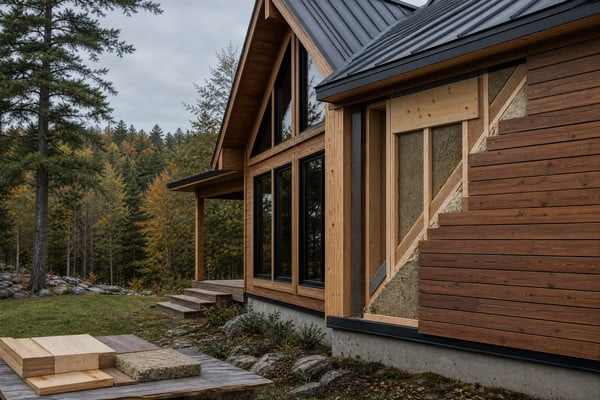
What are the Best Timber Cabin Wall Systems for B2B Procurement? A Comprehensive Guide
Selecting the optimal timber cabin wall system is one of the most consequential decisions in any commercial or large-scale residential project. The wall system affects structural performance, energy efficiency, logistics, long-term maintenance, and the total cost of ownership. This guide is developed for B2B procurement professionals—hospitality developers, architects, project managers, distributors, and overseas buyers—who require a technical, procurement-focused analysis of the three primary wall systems: solid log, insulated panel systems (including SIPs), and hybrid construction.
This guide is intended to help procurement teams evaluate manufacturers’ capabilities—such as experience, CNC fabrication, quality control, and shipping-optimized components—and to provide an actionable decision framework, technical evaluation criteria, cost considerations, and a clear procurement checklist to reduce risk and accelerate project timelines.
What are the main timber cabin wall system types and how do they compare?
The three dominant wall systems on commercial timber cabin projects are:
- Solid Log Construction: Full-dimension logs stacked and notched to form both structure and enclosure.
- Insulated Panel Systems (SIPs, prefabricated insulated timber panels): Engineered wall panels with insulating cores and structural facings that provide continuous thermal performance.
- Hybrid Construction: Strategic combination of exposed log features and insulated panel segments to balance aesthetics and thermal efficiency.
Each system has strengths and trade-offs. The table below summarizes the technical, logistical, and lifecycle dimensions most relevant to B2B procurement decisions.
| Feature / Criterion | Solid Log Construction | Insulated Panel Systems (SIPs) | Hybrid Construction |
|---|---|---|---|
| Aesthetic & Use Case | Classic, authentic cabin look—ideal for resorts, heritage restorations, and high-end private homes. | Contemporary finish options; well-suited to modular hotels, cold-climate housing, and projects prioritizing speed. | Best for projects seeking a signature log façade with modern thermal performance behind the scenes. |
| Thermal Performance | Moderate thermal mass; often requires additional insulation to meet strict codes in extreme climates [1]. | High continuous insulation; low thermal bridging and predictable U-values—favours Passive House-level designs [5]. | Variable—panels provide high R-values in strategic zones while logs provide aesthetic mass. |
| Manufacturing & On-site Assembly | Requires skilled log craftsmen and careful detailing for settling and shrinkage. | Factory-made panels enable rapid assembly, lower on-site labor, and reduced waste. | Moderate complexity: requires coordination between panel and log interfaces; typically faster than full log builds. |
| Logistics & Shipping | High shipping volume and weight; containerization is less efficient due to bulky profiles. | Efficient packing and optimized container use; lower freight cost per square metre for comparable envelope performance. | Depends on the percentage mix—manufacturers that optimize packing can minimize shipping costs. |
| Maintenance & Durability | Higher maintenance (staining, chinking, insect/fungal treatments) but long-lived with correct detailing. | Lower routine maintenance when finished with durable claddings; easier to repair panelized systems. | Targeted maintenance: exposed logs require upkeep; panels reduce specialized intervention overall. |
For procurement teams the right selection hinges on project priorities: authenticity and branding (solid log), schedule and energy targets (SIPs), or a balanced compromise (hybrid). Procurement teams should ask manufacturers to provide performance modelling and trade-off analyses that quantify lifecycle costs, maintenance obligations, and shipping impacts to support procurement decisions.
How do costs compare between wall systems and what should procurement budget for?
Costing must be approached holistically. Raw material cost is only one part of the procurement equation: manufacturing precision, shipping, import taxes, site works, and lifecycle energy savings materially change the long-term business case. Below are the primary cost buckets procurement teams should quantify:
- Materials: Species selection (pine, spruce, cedar), grade, and required treatments. High-grade, kiln-dried timber commands premium pricing but reduces on-site waste and callbacks.
- Manufacturing & Fabrication: CNC profiling, notching, panel lamination, and pre-assembly. Precision factory work shortens onsite labor hours—valuable when local labor is expensive or scarce.
- Logistics & Shipping: Container freight, packaging, and inland transport. Specify Incoterms® 2020 clearly to allocate responsibilities and costs [2].
- Local Construction & Completion: Foundation, utilities, finishes, and contractor labor; often the largest local cost for overseas buyers.
- Compliance & Certification: Costs for building permits, structural stamp approvals, and any required testing or third-party certification.
- Lifecycle Operating Costs: Heating/cooling energy consumption driven by the envelope U-value; SIP-based envelopes typically produce lower operating costs in cold climates [5][6].
Indicative cost relationships (high-level):
- Solid log: moderate-to-high material cost, higher shipping cost, higher lifecycle maintenance.
- SIPs: moderate material cost, lower onsite labor cost, better lifecycle energy savings.
- Hybrid: variable depending on ratio—often achieves favourable lifecycle balance.
Example budgeting rule-of-thumb for an international procurement (very approximate): manufacturing 30–40%, shipping & import 15–30% (variable with Incoterms and destination), site works 20–35%, and contingency/fees 5–10%. A precise quote from your chosen manufacturer should itemize these elements to enable accurate financial modelling.
What technical and regulatory criteria should procurement teams evaluate?
Robust technical due diligence reduces downstream risk. The following evaluation checklist should be used to compare suppliers and wall system options:
Material & timber quality
- Species, structural grade, and certified source (FSC/PEFC) are fundamental for both supply chain transparency and procurement compliance [4].
- Moisture content—kiln-dry levels appropriate to the shipping and destination climate are essential to minimize shrinkage (typical target 12–18% for structural elements).
- Treatment for ground contact or fire performance, specified to meet local code requirements.
Structural & thermal performance
- Stamped structural calculations that reflect local loading conditions (snow, wind, seismic) and are prepared or reviewed by a licensed local engineer where required by the authority having jurisdiction [1].
- Clear R-value/U-value data for assemblies and validated test reports where available. Targets for energy projects should be compared to ENERGY STAR or equivalent guidance where relevant [6].
- Details for thermal bridging mitigation at panel-to-log interfaces and at penetrations.
Manufacturing precision & QA
- Numerical control (CNC) records and tolerance specifications to ensure fit-and-finish and reduce on-site rework.
- Factory acceptance testing, pre-shipment inspection options, and third-party verification options.
- Documented packing lists, numbered components, and clear assembly sequencing for expedited site erection.
Regulatory & sustainability compliance
- Confirm timber legality and chain-of-custody documentation (FSC/PEFC) for procurement policies that require sustainable sourcing [4].
- Ensure wood packaging materials comply with ISPM 15 phytosanitary requirements to avoid quarantine delays [3].
- Define contract Incoterms® 2020 responsibilities up front to avoid disputes and unexpected costs [2].
- Make sure the final design can be documented to comply with the applicable building code (e.g., IBC-based jurisdictions) [1].
How does international compliance, shipping and customs work for timber cabin procurement?
International procurement requires coordinated planning across manufacturing, export logistics, and local import/compliance. Key practical actions procurement teams should take include:
- Assign Incoterms and responsibilities early in the contract negotiation—this determines who pays for freight, insurance, and customs clearance [2].
- Confirm ISPM 15 compliance for all wood packaging materials to prevent quarantine holds and fumigation requirements at destination ports [3].
- Obtain and validate all export documentation: commercial invoice, packing list, bill of lading, certificate of origin, and any phytosanitary certificates required by the destination country.
- Engage an experienced local customs broker and freight forwarder to estimate duties and taxes in advance and to optimize routing and consolidation.
- Budget for potential local testing or additional approvals; some jurisdictions require local seismic or structural re-checks before permitting [1].
Buyers should request detailed shipping manifests and packaging photos from suppliers and confirm whether the supplier offers door-to-site DDP services or other delivery options; these choices trade off buyer responsibility for a simplified single price versus increased supplier handling.
What should B2B buyers verify before choosing a timber-cabin supplier?
When evaluating suppliers, procurement teams should look for the following capabilities:
- Established Expertise: Demonstrable cabin manufacturing experience and the ability to work to project-specific engineering requirements for precision and repeatable quality.
- Manufacturing Precision: Access to advanced CNC machinery, strict tolerance control, and pre-assembly options that reduce onsite labor and accelerate schedules.
- Compliance Support: Ability to provide comprehensive documentation packages (structural calculations, timber certificates, packing lists) to support local permitting and customs clearance.
- Sustainability: Capability to source FSC/PEFC-certified timber and offer low-VOC finishes to meet corporate ESG goals [4].
- Turnkey Logistics: Packaging optimized for container shipping and ISPM 15-compliant wood packaging to reduce transit risk and expedite customs [3].
- Third-party Verification: Options for independent inspections at material receipt, during production and pre-shipment to satisfy procurement compliance regimes.
For technical buyers, request comparative performance modelling from prospective suppliers to quantify energy savings, payback periods, and lifecycle cost projections for each wall system option—these reports are useful when presenting procurement rationale to stakeholders.
Procurement process — step-by-step checklist for B2B buyers
Follow this concise checklist to manage a timber cabin procurement with minimal surprises:
- Prepare a clear project brief: size, occupancy, intended finish, and target energy performance.
- Request detailed quotes with itemized manufacturing, shipping, and optional DDP line items.
- Confirm timber grade, moisture content target, and any required FSC/PEFC documentation [4].
- Define Incoterms® 2020 in the contract so responsibilities for freight and customs are explicit [2].
- Schedule third-party inspections where required by procurement policy.
- Verify ISPM 15 compliance for wood packaging to avoid quarantine delays [3].
- Engage local structural engineer to pre-approve stamped drawings for permitting [1].
- Plan on-site logistics: crane availability, foundation readiness, and local contractor capabilities.
- Allocate contingency for local permits, import duties, and potential design adaptations.
- Confirm warranty terms, maintenance schedules, and spare parts/consumables supply plan.
For further reading on strategic choices between factory-built panels and traditional log systems, see our internal resources such as our guide on prefab vs traditional cabins and for shipping-specific procurement guidance see our shipping and Incoterms guide.
Frequently Asked Questions (FAQ)
Below are common buyer questions that recur during large procurement cycles:
- Q: Which wall system yields the lowest operational heating costs in cold climates?
- A: Insulated panel systems (SIPs) typically deliver the lowest heating loads when properly detailed because of continuous insulation and minimal thermal bridging. Panels can be engineered to Passive House-level performance where required [5].
- Q: How much lead time is required for a custom cabin order?
- A: Lead times depend on complexity, quantity and current production schedules. Typical factory manufacturing ranges from 4–12 weeks, with international shipping of 3–8 weeks depending on routing. Manufacturers typically provide a detailed Gantt for each contract.
- Q: Are wood packaging materials a customs risk?
- A: Only if they are not ISPM 15-compliant. Buyers should ensure suppliers use ISPM 15-compliant wood packaging to prevent quarantine holds and fumigation delays at destination ports [3].
- Q: What structural drawings should buyers request for local-authority approval?
- A: Many manufacturers produce structural calculations and drawings. Where a local licensed engineer’s stamp is required, buyers should collaborate with a buyer-appointed local engineer to secure approval [1].
- Q: What sustainability credentials can you provide?
- A: Suppliers may be able to supply chain-of-custody documentation for FSC or PEFC-certified timber on request and offer low-emission finish options to support ESG objectives [4].
Talk to OwnCabin About Your Cabin Project
OwnCabin Factory is located in Feixian Economic Development Zone, Linyi, Shandong, China. For an inquiry, share your site location, intended use, floor area, climate conditions, and target delivery date so the discussion can focus on your project requirements.
Website: owncabin.com
Email: info@owncabin.com
References
- International Code Council (ICC) – International Building Code (IBC) — Guidance for structural design criteria and code compliance (snow, wind, seismic) relevant to timber structures.
- International Chamber of Commerce (ICC) – Incoterms® 2020 — Standard commercial terms that allocate shipping, insurance and customs responsibilities between buyer and seller.
- USDA APHIS – ISPM 15 Wood Packaging Rules — International phytosanitary regulations governing wood packaging to prevent pest spread.
- Forest Stewardship Council (FSC) – Chain of Custody — Certification program verifying timber sourcing from responsibly managed forests.
- Passive House Institute – Passive House Standard — Performance-based standard for ultra-low-energy buildings; useful benchmark for high-performance panelized envelopes.
- ENERGY STAR – Energy Efficiency Guidelines — Performance benchmarks and product guidance for achieving reduced operational energy use in buildings.
Next Steps — Request a Custom Quote or Lookbook
To start the procurement process we recommend:
- Send a project brief (site location, target footprint, preferred wall system and estimated timeline) to info@owncabin.com.
- Request a bespoke quotation and a comparative performance report for your shortlisted wall systems.
- For product information, contact OwnCabin at info@owncabin.com and state the technical details you need to evaluate.
Contact OwnCabin at info@owncabin.com to submit an inquiry. Ask each supplier to clarify available capacity, inspection options, proposed scope and delivery assumptions in writing.