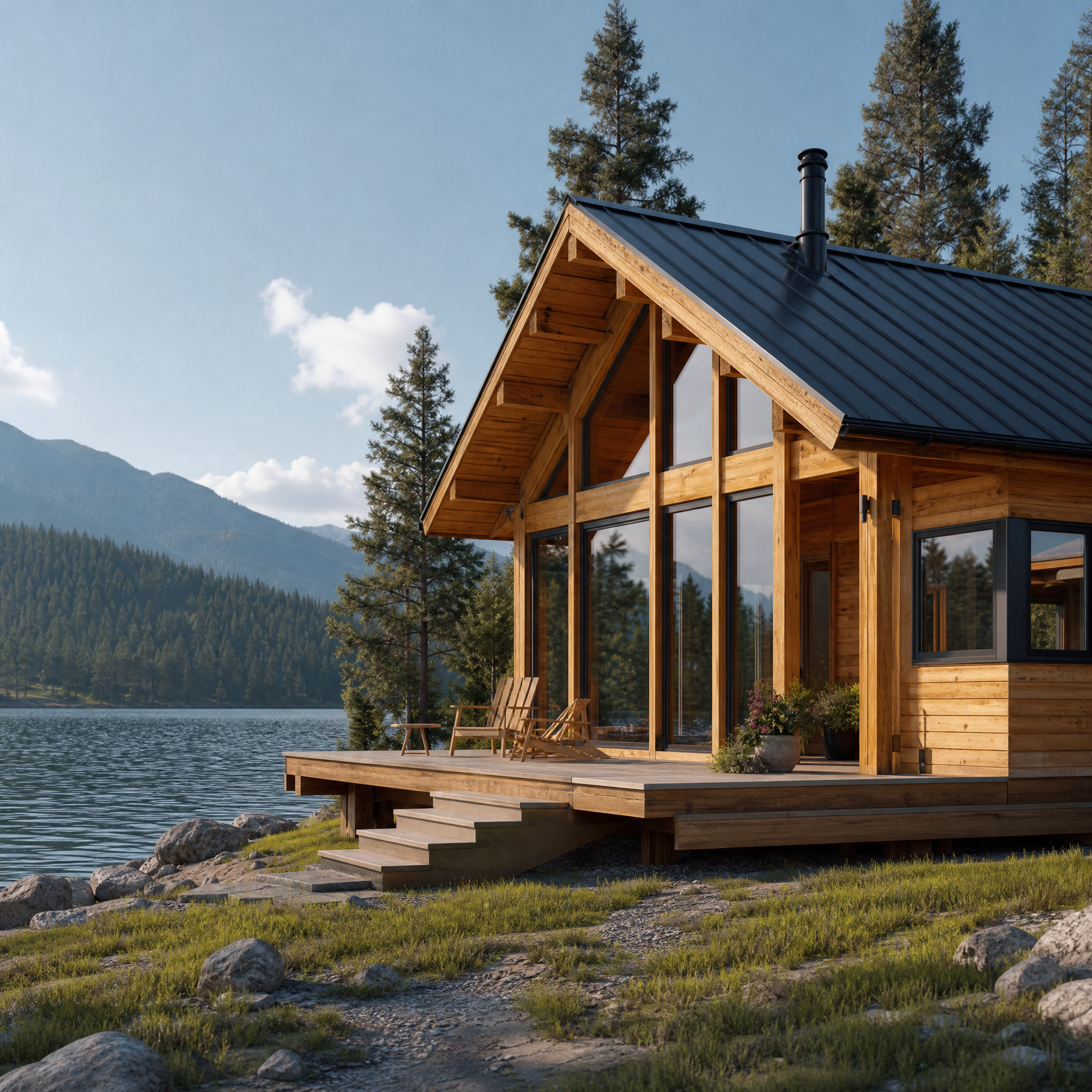
A clear understanding of the terms “cabin kit” and “turnkey cabin” helps buyers, builders, and regulators set expectations for who does the work, which codes and inspections apply, and what “ready to occupy” means. This article summarizes common industry and U.S. regulatory terminology, compares the two approaches, and highlights jurisdictional considerations that affect classification, permitting, financing, and installation.
Key Takeaways
– “Cabin kit” commonly refers to a package of prefabricated components (precut, panelized, or sectional parts) delivered for on-site assembly; classification depends on construction method and local code (see HUD definitions).
– “Turnkey cabin” describes a delivery/contract model in which the provider or contractor delivers a finished, ready-to-occupy dwelling; “turnkey” is not a formal code category and does not by itself determine regulatory treatment.
– U.S. regulatory categories that matter for permits and oversight include HUD Code manufactured homes and various forms of factory-built housing (modular, panelized, precut); local law controls final classification.
– Financing, appraisal, installation oversight, and permitting requirements vary by jurisdiction; Fannie Mae, HUD, state agencies, and local building departments have different roles and criteria.
– Always confirm the applicable local, state, and federal rules before purchasing, permitting, or siting either a kit or a turnkey cabin.
Definitions: regulatory and industry terms (U.S.-centric)
– HUD distinctions: The U.S. Department of Housing and Urban Development (HUD) differentiates site-built homes, HUD Code manufactured homes, and factory-built homes. HUD Code manufactured homes are built complete in a factory on a nonremovable steel frame and subject to a national HUD standard. Factory-built homes are work that is primarily done in a factory and assembled on site, and they typically must comply with local building codes. Precut homes, panelized homes, and modular homes are examples of factory-built housing noted by HUD. These are U.S. regulatory and industry terms; local law controls final classification. (Source: HUD brief)
– Turnkey: Industry usage of “turnkey” refers to a delivery and contract approach where the cabin provider delivers a dwelling ready for occupancy, with the seller/contractor responsible for finishing, installation, and required inspections. “Turnkey” is not itself a formal building-code category; the cabin’s construction method and foundation determine applicable codes and regulatory oversight.
– Kit: A “cabin kit” typically supplies materials and prefabricated components for on-site assembly. Kits can be:
– Precut/log kits (pieces cut to shape, often for log or timber systems),
– Panelized kits (pre-built wall panels and assemblies),
– Sectional or modular components (factory-constructed sections later joined on-site).
Whether a kit becomes a “factory-built” or “site-built” structure depends on how components are built and assembled and which code or standard applies locally.
How cabin kits are commonly structured
Precut and log-house kits
- Description: Kits supplying machined logs or timbers, cut-to-length components, and fasteners with assembly instructions. Materials may be engineered lumber, dimensional lumber, or full logs.
- Regulatory implications: Materials-only kits that are assembled on a permanent foundation often fall under local building codes for site-built or factory-built housing depending on the level of off-site fabrication. The technical behavior of wood (moisture, shrinkage, treatment) is a relevant design and maintenance consideration (technical context available from wood engineering resources). The end classification depends on construction method and local code.
Panelized kits
- Description: Wall, roof, and floor panels produced in a factory and shipped for on-site erection. Panels speed site assembly but usually require a building permit and inspection where local codes apply.
- Regulatory implications: Panelized systems are generally treated as factory-built housing and must comply with the applicable local building code where installed.
Modular or sectional components
- Description: Large sections (modules) built to a code standard in a factory and assembled on a permanent foundation on site.
- Regulatory implications: Modular units built to the International Residential Code (IRC) or a state-administered code are commonly classified as modular factory-built housing; subject to the applicable state or local approval process.
What “turnkey cabin” means in practice
– Delivery model: The turnkey provider coordinates design, permits (where contracted), site preparation, foundation, delivery, installation, finishing work, and often final inspections so the buyer receives a completed dwelling.
– Regulatory implications: The underlying construction method (site-built, modular, panelized, or manufactured home built under HUD Code) determines which building code and inspection regime applies. Calling a project “turnkey” does not change the technical or legal classification.
– For HUD Code manufactured homes, HUD’s Office of Manufactured Housing Programs enforces construction, safety, and installation standards and oversees dispute resolution and inspections for HUD-regulated homes; installation and local requirements may still apply.
Comparing cabin kits and turnkey cabins — practical differences
Who does the work?
- Cabin kit: Buyer or local contractor typically responsible for site work, foundation, assembly, utilities, finish trades, and inspections (unless the kit provider offers installation as an add-on).
- Turnkey cabin: Provider/contractor manages most or all tasks, presenting the buyer with a final, ready-to-use dwelling.
Regulatory and inspection pathway
- Cabin kit: May be treated as site-built, factory-built (panelized), or modular depending on off-site construction and local code; buyer must secure permits and inspections per local requirements.
- Turnkey cabin: The same underlying classification applies, but the turnkey provider often coordinates permitting and inspections as part of the service. For HUD Code manufactured homes, federal standards and state installation oversight may apply in addition to local rules.
Scope of completion at delivery
- Cabin kit: Delivered materials and components; on-site completion needed for occupancy.
- Turnkey cabin: Delivered and installed finished dwelling; the buyer receives it ready for occupancy subject to local occupancy approvals.
Regulatory, financing, and appraisal considerations (U.S. context)
– HUD vs. factory-built vs. site-built: HUD Code manufactured homes are regulated under a federal standard and are built on a permanent chassis; factory-built types such as modular or panelized housing generally must comply with local building codes. These distinctions influence permitting, transportation, installation, and inspection pathways.
– Lending and appraisal: Fannie Mae provides guidance distinguishing modular homes from prefabricated, panelized, or sectional housing and identifies the need for appraisals to use appropriate comparable sales. Its standards illustrate how U.S. lending criteria may treat different factory-built types differently; they do not constitute a universal financing guarantee. (Source: Fannie Mae)
– Local variation: State and local governments can treat tiny homes, cabins, and factory-built units differently. For example, some jurisdictions have specific regulatory frameworks for tiny homes or for modular approvals; others rely solely on standard residential building codes. Model-code appendices (for example, IRC Appendix Q for tiny houses) offer examples but require local adoption to be enforceable. Always check current local rules.
Materials, durability, and technical context
– Wood and log systems: Wood material properties (moisture relations, dimensional change, preservative treatments) are important to log and timber constructions. Factory fabrication can control moisture content and quality more tightly; on-site assembly requires attention to wood behavior, sealing, and maintenance. Technical resources on wood engineering provide background but project-specific design and calculations must comply with applicable code and engineering practice.
Sample comparison table
| Feature | Cabin kit (precut/panelized/sectional) | Turnkey cabin (finished delivery) |
|---|---|---|
| Typical delivery content | Components, panels, or precut parts + instructions | Installed, finished dwelling ready for occupancy (subject to local approvals) |
| Assembly responsibility | Buyer or local contractor (unless installation service added) | Provider or contracted builder coordinates installation and finishing |
| Common regulatory pathway | Could be site-built, factory-built panelized, or modular depending on fabrication | Same technical classification applies; turnkey denotes delivery model, not regulatory class |
| Permits & inspections | Buyer obtains or coordinates per local code | Provider often coordinates permits and inspections, but local approvals still required |
| Financing/appraisal notes | Appraisals depend on final classification and comparable sales | Appraisals and loan eligibility depend on classification and lender standards (Fannie Mae guidance applies in U.S. lending contexts) |
| Suitability for log/timber systems | Common for precut/log kits; requires wood-specific detailing | Turnkey providers may offer completed log/timber cabins built to local code |
| Jurisdictional examples and why local rules matter | ||
| – HUD oversight: HUD’s Office of Manufactured Housing Programs enforces federal construction and installation standards for HUD Code manufactured homes and supervises state agency enforcement in some areas. State and local requirements can still apply to installation and site work. | ||
| – State variation: Some states publish guidance separating manufactured homes, modular homes, and tiny homes and set different plan review or foundation requirements for modular construction. These distinctions illustrate why a structure’s legal classification depends on local rules. | ||
| – Model-code examples: The International Residential Code Appendix Q provides example provisions for tiny houses (e.g., floor-area thresholds) but is a model appendix that only becomes applicable where adopted by a jurisdiction. Do not assume model-code criteria are enforceable unless local adoption is confirmed. |
Frequently Asked Questions
Q: Is a cabin kit the same as a manufactured home?
A: Not necessarily. HUD Code manufactured homes are factory-built on a nonremovable steel frame and built to a federal standard. Many cabin kits are precut, panelized, or modular systems that are treated as factory-built or site-built housing depending on fabrication and local code. Classification depends on construction method and applicable jurisdictional rules.
Q: Can I finance a cabin kit or turnkey cabin?
A: Financing and appraisal depend on the final legal and construction classification (site-built, modular, panelized, HUD Code manufactured home) and lender-specific requirements. Fannie Mae and other U.S. lenders have guidance for factory-built housing types, but eligibility and terms are determined by the lender and the applicable classification. This article does not guarantee financing or appraisal outcomes.
Q: Which should I choose if I want a faster delivery and minimal on-site work?
A: A turnkey delivery model usually minimizes buyer-managed on-site work because the provider handles coordination, finishing, and inspections. However, the actual time, cost, and permitting path will depend on the chosen product, local permit timelines, site conditions, and whether the dwelling falls under HUD Code or local building code. Always verify local permitting and siting rules before purchase.
Important legal and practical caveats
– Local control: Building classification, code, permitting, placement, finance, appraisal, insurance, and tax treatment differ by country, state, and local jurisdiction. The terms used here reflect common U.S. industry and regulatory distinctions. Always confirm the applicable classification and approval pathway with local building and zoning authorities and, where relevant, state or federal agencies.
– No promises: This article does not promise permit approval, financing, insurance, appraisal outcomes, or compliance. Project-specific compliance requires submission to the applicable permitting authority and adherence to local regulations and standards.
Contact Us
For inquiries, please visit our website at owncabin.com or contact us via email.
References
https://www.huduser.gov/portal/sites/default/files/pdf/Info-Brief-SingleFamilyHomeowners.pdf
https://www.hud.gov/hud-partners/manufactured-home
https://doh.colorado.gov/consumers-of-manufactured-homes-and-tiny-homes
https://selling-guide.fanniemae.com/sel/b4-1.4-02/factory-built-housing-modular-prefabricated-panelized-or-sectional-housing
(For technical background on wood materials and for model-code examples for small dwellings, consult recognized technical publications and current local code adoption documents. Always check current local regulations and agency guidance before purchasing or siting a cabin kit or turnkey cabin.)