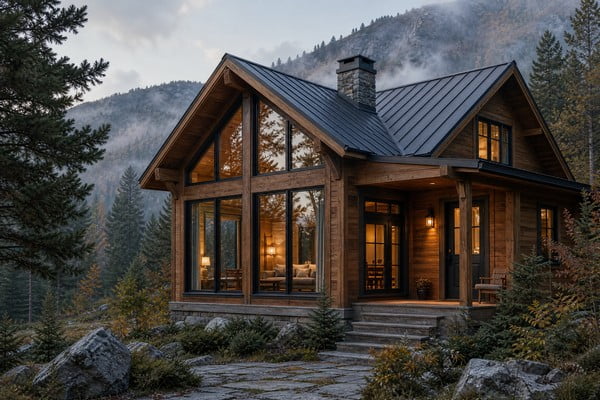
How to Optimize Windows, Doors, and Insulation for Your Timber Cabin’s Climate?
For B2B buyers, developers, and project managers specifying timber cabins, optimizing fenestration and thermal envelopes is a strategic decision that impacts energy use, occupant comfort, building durability, and lifecycle cost. This guide provides a technical, procurement-focused framework to select windows, doors, and insulation that meet climate challenges, regulatory requirements, and commercial constraints.
Project Scope and Assumptions
This document is written for project teams procuring multiple timber cabins or a single large custom cabin where reliability, certification, and long-term value are essential. Assumptions used throughout:
- Project types: eco-resorts, residential developments, government recreational facilities, and remote off-grid installations.
- Professional execution: design, installation, and commissioning will be performed by qualified professionals or certified installers.
- Regulatory baseline: projects will comply with applicable local building codes and the international standards noted below; buyers should request document-level compliance and technical submittals from their chosen manufacturer.
- Life-cycle focus: procurement choices are evaluated by total cost of ownership (TCO), not simply first-cost.
- project-specific engineering documentation approach: emphasis on precision tolerances, robust detailing, controlled factory QA, and design-for-manufacture-and-assembly (DfMA).
What are the best window systems for different climates?
Choosing the correct window system depends on climate, orientation, architectural intent, and energy targets (e.g., local code compliance, passive-house, or net-zero objectives). Key performance criteria include U-factor (thermal transmittance), Solar Heat Gain Coefficient (SHGC), Visible Transmittance (VT), air leakage (AL), and condensation resistance. For international specification and comparison, require certified performance ratings (e.g., NFRC labels in North America or equivalent test reports) and specify test conditions for project acceptance [1].
Climate-driven window selection — practical rules
- Arctic / Very cold climates: Triple-pane low-E glazing with krypton or high-quality argon fills; thermally-broken fiberglass or high-quality wood–aluminium composite frames. Target U-factor ≤ 0.20 (imperial) or equivalent metric value for passive-house projects [1].
- Cold / Temperate climates: Double-pane low-E with argon, warm-edge spacers, and insulated frames. Optimize SHGC for passive solar gain on south-facing façades while minimizing heat loss on other exposures.
- Hot / Arid climates: High-performance double-pane with low SHGC coatings, reflective exterior glazing options, and frames that limit thermal bridging (fiberglass or thermally-broken aluminium).
- Tropical / Humid climates: Focus on corrosion-resistant hardware, high condensation-resistance glazing, and frames with effective insect and water seals. Consider operable high-volume natural ventilation strategies combined with shading (overhangs, louvers).
- Coastal and salt-spray environments: Specify marine-grade hardware and finishes; use fiberglass or anodized aluminium with stainless steel fasteners and marine coatings to prevent corrosion.
Performance verification: require factory performance data, independent test reports, and in-line production QA. For large B2B orders, buyers should request sample sets and pre-shipment inspection options from their manufacturer to verify U-factor, AL, and SHGC values against contract thresholds [1].
How does insulation type affect moisture management and fire safety?
Insulation selection must balance thermal resistance (R-value), moisture control, fire performance, compressive strength, and environmental impact. Timber cabins are moisture-sensitive systems: incorrect insulation detailing can trap moisture, cause decay, and void warranties. Use a hygrothermal approach (analysis of moisture and temperature over time) for assemblies to ensure vapor profiles and drainage/venting paths are correct.
Material properties and hygroscopic behavior
- Closed-cell spray foam: High R-value per inch and acts as an air and vapor retarder when applied continuously; advantageous in retrofit and in airtight new builds but restricts drying to the interior—use with caution where timber needs to dry to the exterior. Consider fire-retardant coatings and ensure compliance with local fire ratings.
- Rigid PIR/XPS boards: High R/inch and good moisture resistance; ideal under sheathing layers or for thin assemblies where structural or foundation insulation is required.
- Mineral wool (rock wool): Vapor-open, non-combustible, excellent acoustic performance; it allows drying to both sides, which is advantageous for timber walls if paired with a correctly designed air barrier and rain-screen cladding.
- Blown-in cellulose: Eco-friendly and cost-effective but hygroscopic and susceptible to moisture migration; requires robust cavity detailing and secondary drainage planes in wetter climates.
Fire safety: mineral wool provides inherent fire resistance (non-combustible). For other materials, specify tested fire performance (e.g., ISO 11925-2 / EN 13501-1 classifications in Europe or equivalent local test standards). Ensure the full cavity assembly, including membranes and sealants, is considered in fire and smoke spread evaluations [2].
How should doors be specified for security, thermal performance and aesthetics?
Entry and service doors combine several functional requirements: security, thermal performance, weather resilience, acoustic performance, and aesthetics consistent with timber architecture. Doors should be specified with a clear set of acceptance criteria:
- Thermal target: specify door R-value or U-factor consistent with the overall envelope target; target values should be defined per climate zone and project energy targets.
- Security rating: mechanical performance requirements (e.g., cylinder standards, multipoint locking, impact resistance) and ballistic or forced-entry ratings where relevant.
- Durability and maintenance: choose materials (fiberglass, insulated steel, thermally-broken aluminium with wood veneer) based on exposure and finish preferences; require factory-applied finishes with UV and moisture protection for external wood veneers.
- Threshold and water management: specify thresholds, weep paths, and drainage details to prevent water tracking into timber elements; require compatibility with the cabin’s sill and subfloor assemblies.
- Certification & testing: request test reports for air infiltration, water penetration, structural performance (wind/suction), and hardware cycle tests.
Decision Framework and Comparison Table
Below is a condensed technical-comparison table designed for quick procurement decisions. Use it as a summary in RFQs, but require detailed spec sheets and certified test reports for final selection.
| Component | Typical Specification / Material | Typical Performance Metrics | Cost Band (Material only) | Key Risks / Mitigation |
|---|---|---|---|---|
| Windows | Triple-pane Low-E, krypton/argon fill, fiberglass or wood-aluminium composite frame | U-factor ≤0.20 (cold); SHGC tailored to orientation; AL per NFRC ≤ 0.3 | High | Weight and frame strength; mitigate with engineered framing and certified anchors |
| Doors | Insulated fibreglass with insulated core or thermally-broken steel with wood veneer | R-value 3–7 depending on build; security multipoint locks; water penetration rating per EN/ASTM | Medium–High | Warping in high-humidity zones; mitigate with factory sealants, ventilation at thresholds |
| Insulation — Walls | Mineral wool batts or rigid PIR with ventilation cavity | R-value 3.0–6.0 per inch (assembly target per code) [2] | Medium | Moisture accumulation; mitigate with vapour control layer and rain-screen cladding |
| Insulation — Roof | Closed-cell spray foam + ventilated roofing or high-density rigid board | R-value 6–7 per inch (closed-cell); continuous layer reduces thermal bridging | High | Fire-treatment compliance; mitigate with non-combustible top layers where required |
| Insulation — Floor/Foundation | XPS rigid board or PIR with capillary-break membranes | R-value 4–6 per inch; compressive strength for load-bearing | Medium | Moisture wicking from ground; mitigate with damp-proof membrane and proper drainage |
Technical / Product Evaluation Criteria
When preparing RFQs and technical comparisons, require suppliers to provide the following deliverables and test evidence:
- Certified performance labels or test reports (U-factor, SHGC, AL) from accredited labs or NFRC-equivalent bodies for fenestration [1].
- Material safety and fire data sheets; flame spread / smoke development indices for insulation and finish materials [2].
- Environmental chain-of-custody and sustainable sourcing certifications for timber elements (FSC or PEFC where required) to meet procurement sustainability policies [4].
- Details of thermal breaks, spacer bars, sealants, and installation tolerances. For large projects, include production tolerances and batch traceability.
- Factory QA procedures, pre-shipment inspection (PSI) checklist, and acceptance criteria for handling damage, packaging (including ISPM 15 treatments for wooden packaging where applicable) [3].
Cost Breakdown and Budget Considerations
For B2B procurement, produce a cost model that separates unit material cost, logistics (freight, duties), installation labor, field modifications, and long-term energy savings. Include contingency for FX fluctuations and supply-chain lead times. Typical line-items to include in the budget model:
- Material cost (per window/door/insulation m²)
- Custom manufacturing and non-standard sizes
- Protective packaging and ISPM 15 phytosanitary treatments for timber crates where shipments touch wooden packaging standards [3]
- Freight, port handling, and customs duties
- On-site labor and certified installer premiums (e.g., spray foam installers)
- Warranty and long-term maintenance reserve (annualized)
Value-engineering tip: align window sizes to standard manufacturer lines to avoid custom unit premiums, and specify whole- project glazing packages to achieve volume discounts. Consider asking your procurement team or supplier to create consolidated RFQs bundling windows, doors, and insulation to reduce shipping and handling costs and accelerate lead times.
Compliance, Import, and Local Approval Considerations
International procurement introduces regulatory complexity. Typical compliance and logistics items:
- Incoterms and commercial terms: define responsibilities clearly—FOB, CIF, DDP are commonly used. For turnkey projects, DDP can remove customs complexity from the buyer but increases vendor responsibilities and pricing [5].
- Packaging and phytosanitary rules: wooden crates, pallets, or timber dunnage must meet ISPM 15 phytosanitary standards to prevent freight holds at destination ports [3].
- Local building code approvals: provide stamped drawings, test reports, and product submittals aligned to local requirements (e.g., IBC, Eurocodes, or national standards). Buyers should request submittal packages from their supplier for approval authorities.
- Certifications and chain-of-custody: where procurement policies require FSC/PEFC certified wood, specify certificate numbers and supply chain transfer documentation [4].
Procurement Process and Buyer Checklist
Follow a structured procurement workflow to reduce delays and disputes. The checklist below is designed for large-scale B2B projects.
- Define performance targets: U-factors, R-values, SHGC, AL, and service life targets. Tie these to contract acceptance criteria.
- Supplier prequalification: evaluate factory capability, QA systems, references, and export experience. Require recent factory audit reports for critical suppliers.
- Issue precise RFQ/RFP: include drawings, performance specs, acceptance tests, packing and handling requirements, Incoterms, lead times, and warranty conditions.
- Evaluate proposals technically and commercially: create a weighted scorecard (performance vs. price vs. delivery vs. warranty).
- Prototype and sample approval: sign off shop drawings, finish samples, and at least one sample unit for site mock-ups.
- Contract and QA plan: include pre-shipment inspection (PSI), hold-points, and remedy clauses for non-conformance.
- Logistics and customs coordination: ensure ISPM 15 compliance for wooden packaging and verify commodity HS codes for duty estimates [3].
- Installation supervision and commissioning: define installation tolerances and commissioning tests (blower door, thermal imaging, water penetration tests).
- Warranty and spare parts: secure spare hardware kits, glass, and seals for the first 5–10 years and specify warranty response SLAs.
How should large B2B buyers evaluate supplier capability?
Buyers should request the following services and deliverables from prospective suppliers to support large B2B projects:
- Custom design-for-manufacture solutions tuned to your climate and code requirements.
- Factory quality assurance, batch traceability, and independent pre-shipment inspection options.
- Documentation packages suitable for permit submissions and local approvals.
- Logistics coordination including ISPM 15-compliant packaging and support for DDP or CIF sourcing options [3][5].
- Post-delivery technical support, warranty handling procedures, and spare parts supply planning.
Manufacturers sometimes publish technical whitepapers and product submittal templates to help procurement teams prepare RFQs and streamline approvals. See the guide on prefab vs traditional cabins and the detailed specification checklist for windows, doors, and insulation for sample RFQ language and acceptance test templates.
Frequently Asked Questions (FAQ)
- Q: What U-factor or R-value should I specify for a high-performance timber cabin?
- A: Specify targets based on climate zone and energy objective. As a rule: passive-house targets require window U-factors typically ≤0.15–0.20 (imperial); typical high-performance cabins target U-factors ≤0.25 for windows and assembly R-values per local code for walls/roofs. Always request certified test reports to verify claimed values [1][2].
- Q: How do we avoid moisture problems when using spray foam in timber walls?
- A: Use a hygrothermal analysis to confirm drying potential. If closed-cell spray foam is used, ensure the exterior wall permits drying (e.g., ventilated rainscreen) or specify an exterior vapor-open rain-screen sheathing. Where timber exposure to moisture is a concern, mineral wool with a well-detailed air barrier often provides safer long-term performance [2].
- Q: Are there special shipping or packaging requirements for timber cabin components?
- A: Yes. All wooden packaging or dunnage must meet ISPM 15 phytosanitary requirements, and heavy fenestration units should be crated to prevent damage. Early coordination on packaging, palletization, and port handling reduces damage risk and customs holds [3].
- Q: What timber-origin and chain-of-custody documentation should buyers request?
- A: Buyers should ask their supplier whether FSC or PEFC certified components and chain-of-custody documentation can be provided as part of the contract package; require certification numbers and supporting transfer documentation where procurement policies mandate it [4].
- Q: What Incoterm should we request for turnkey international deliveries?
- A: For turnkey responsibility and reduced customs risk, buyers sometimes request DDP (Delivered Duty Paid) so the supplier handles import clearance and local delivery. However, DDP shifts more responsibility to the seller and typically increases price. Discuss trade-offs early and include Incoterm in the RFQ [5].
References
- [1] U.S. Department of Energy — Energy-Efficient Windows: guidance on U-factor, SHGC, and fenestration performance. https://www.energy.gov/energysaver/energy-efficient-windows
- [2] U.S. Department of Energy — Insulation: R-values, material guidance, and hygrothermal considerations. https://www.energy.gov/energysaver/insulation
- [3] FAO / International Plant Protection Convention — ISPM 15: Guidelines for wood packaging and phytosanitary measures (relevant for international shipping and wooden crates). https://www.ippc.int/en/core-activities/standards-setting/ispm-15/
- [4] Forest Stewardship Council (FSC) — Chain-of-custody certification and responsible sourcing for timber products. https://fsc.org/en
- [5] International Chamber of Commerce — Incoterms® 2020: definitions of commercial terms for international trade and seller/buyer responsibilities. https://iccwbo.org/resources-for-business/incoterms-rules/incoterms-2020/
Call to Action & Contact
To discuss tailored specifications, certified submittals, or to request a volume quote, contact the commercial team at the details below. They can prepare a custom proposal, sample submittal, and logistics plan to help evaluate timelines and compliance needs.
- Email: info@owncabin.com
- Request a Quote: Contact us to arrange a technical call and prototype sample review.
- Download our Lookbook: Visit /lookbook-download/ to download the latest product lookbook with detailed section drawings, finish palettes, and specification templates.
Request a custom quote or the Lookbook today—email info@owncabin.com and we’ll respond with a tailored proposal and next-step schedule.
Talk to OwnCabin About Your Cabin Project
OwnCabin Factory is located in Feixian Economic Development Zone, Linyi, Shandong, China. For an inquiry, share your site location, intended use, floor area, climate conditions, and target delivery date so the discussion can focus on your project requirements.
Website: owncabin.com
Email: info@owncabin.com